
Most business owners know the $60,000 rule. Fewer stop to ask whether registering earlier than that could actually be the smarter move. It's something we talk about with clients a lot — and there's no single right answer for everyone.
Quick Summary
- You only have to register once your turnover reaches $60,000, but you can choose to register earlier.
- GST works both ways: you charge it on what you sell, but you can also claim it back on what you spend.
- Whether early registration is worth it mostly depends on who your customers are.
- There's no one right answer — it depends on your situation.
GST Has Two Sides
A lot of business owners only think about GST as something you charge your customers once you start making sales. But GST also applies to the money going out — the things you buy for your business.
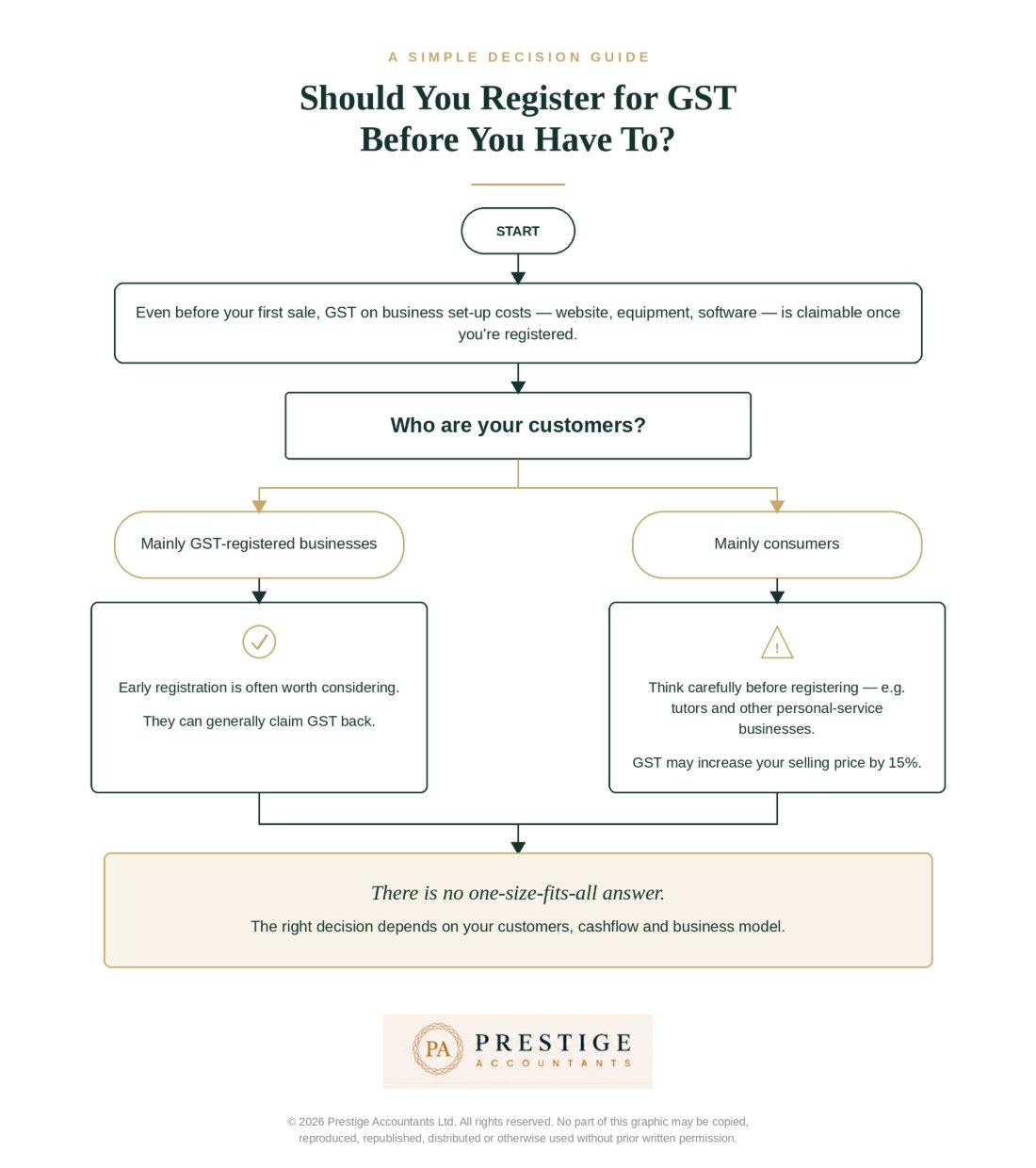
This is where a common mistake happens. Some new business owners think, "I'm not making any money yet, so I don't need to worry about GST." But even before you get your first customer, you're likely spending money on a website, equipment, software, advertising. GST is included in most of those costs too, and once you're registered, you can claim that money back.
In simple terms: the GST you charge customers is called output tax. The GST you pay on your own expenses is called input tax. Both matter — not just the first one.
The Cost Side
Registering isn't completely free of effort. You'll need to file GST returns regularly, keep good records, and add GST to your prices — an extra 15% your customers will need to pay.
The Benefit Side
Once you're registered, the GST hidden in your business costs becomes claimable — equipment, software subscriptions, professional fees, fuel and vehicle costs (even if you can only claim part of it for business use). If you're spending a fair amount to get your business going, this can genuinely help your cashflow.
The Real Question: Who Are Your Customers?
If most of your customers are other GST-registered businesses, charging GST barely matters — they can claim it back too, so your price doesn't really change for them. Registering early is often an easy win here.
If your customers are mainly everyday people, it's different. Adding 15% to your price is money they can't claim back. We've seen this with small, personal-service businesses — for example, a tutor whose clients are mostly families paying out of their own pocket. Registering early in that case can make prices less competitive, for little benefit.
Which Approach Is Right for You?
It depends on your customers, how much you're spending to set up, and how much extra admin you're comfortable with. It's worth thinking through properly, rather than just defaulting one way.
If you'd like help weighing this up for your own business, get in touch with Prestige Accountants.